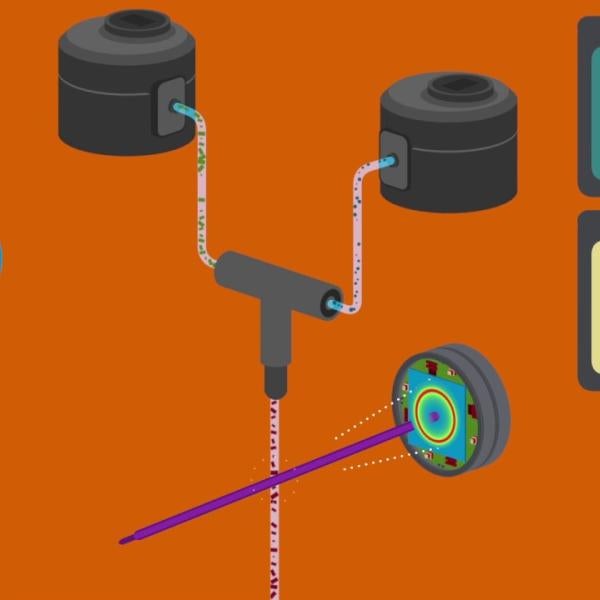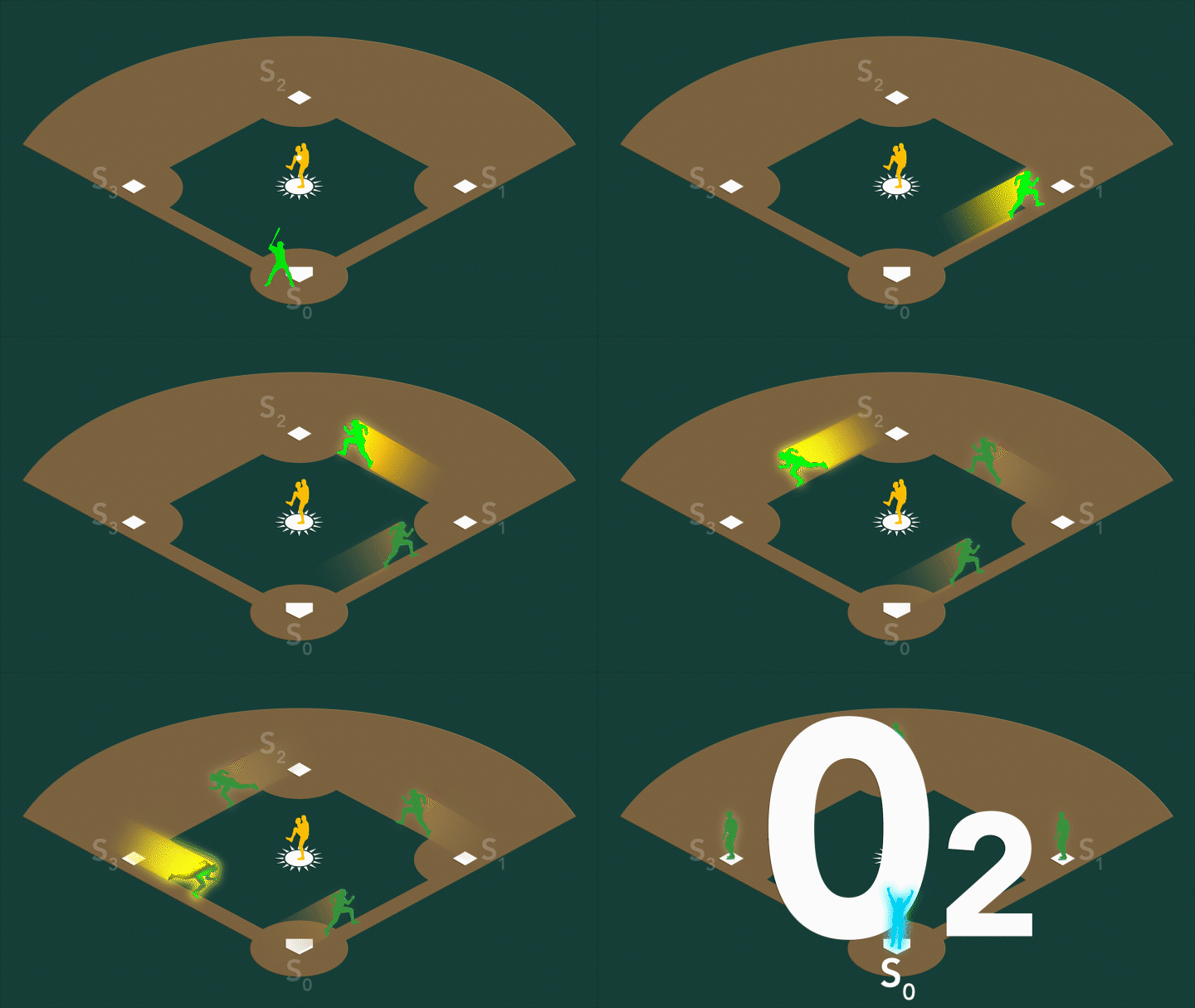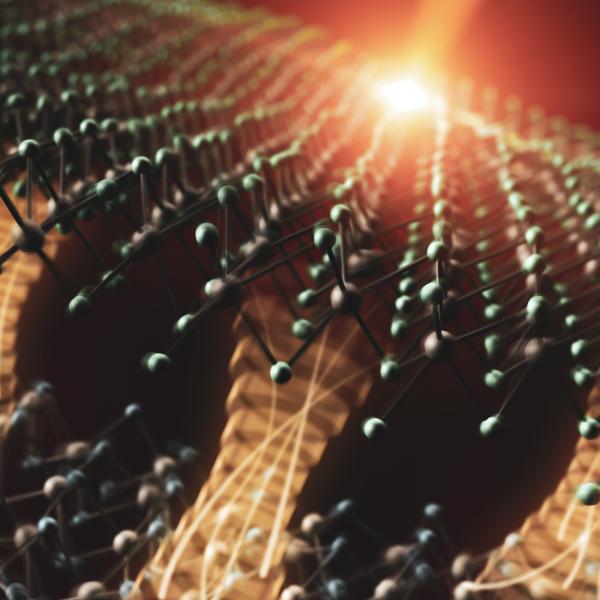

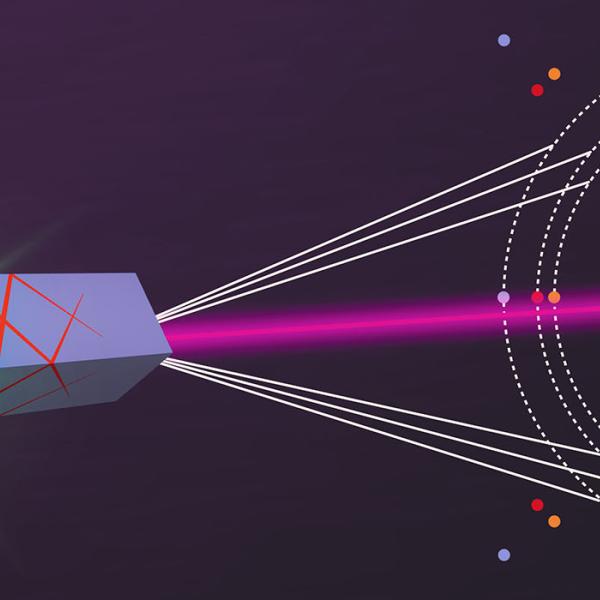
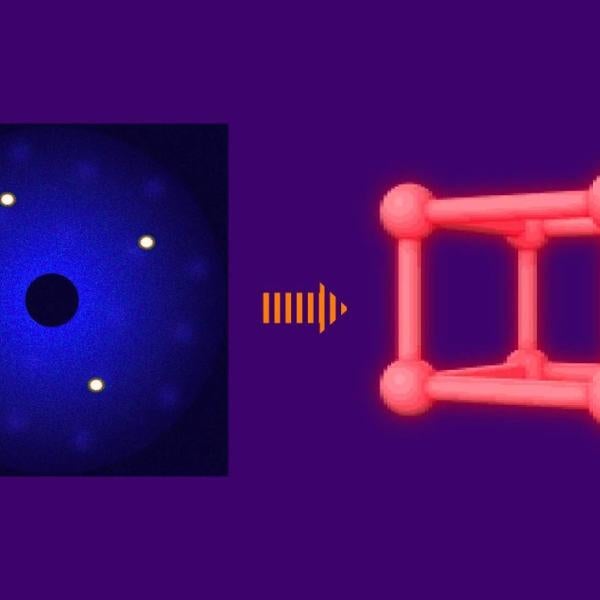
This animation explains how researchers use high-energy electrons at SLAC to study faster-than-ever motions of atoms and molecules relevant to important material properties and chemical processes.
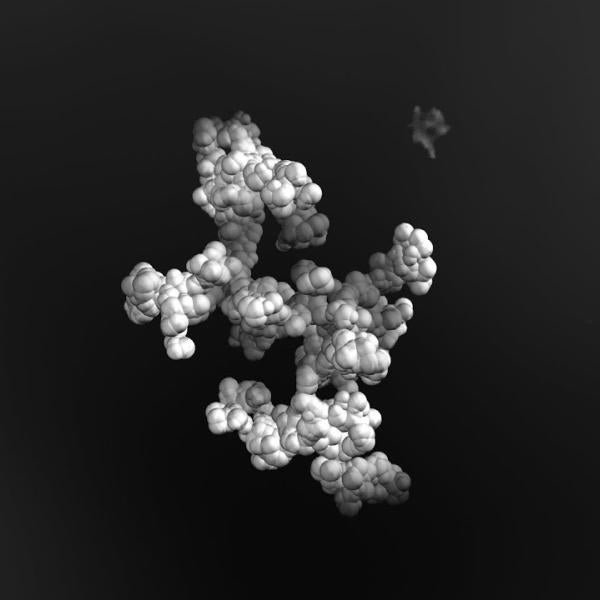
This short conceptual animation depicts how scientists can now simultaneously capture fractal morphology (structure), chemical composition and nanoscale imagery of individual aerosol particles in flight. These particles, known as "PM2.5" because they are smaller than 2.5 microns in diameter, affect...
In a landmark experiment at SLAC National Accelerator Laboratory, scientists used an X-ray laser to capture the first snapshots of a chemical interaction between two biomolecules in real time and at an atomic level.
After more than a decade, LCLS was upgraded to generate even more powerful X-ray laser beams. With the LCLS-II upgrade, LCLS is around 10,000 times brighter and fires about 8,000 times faster. It generates up to one million pulses per...