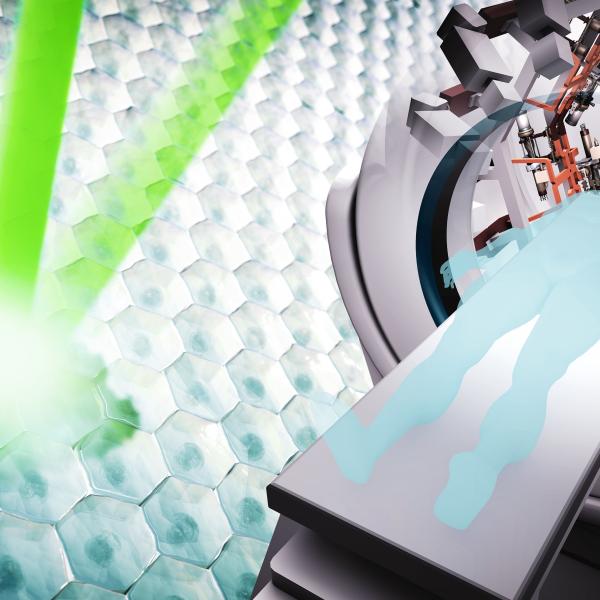
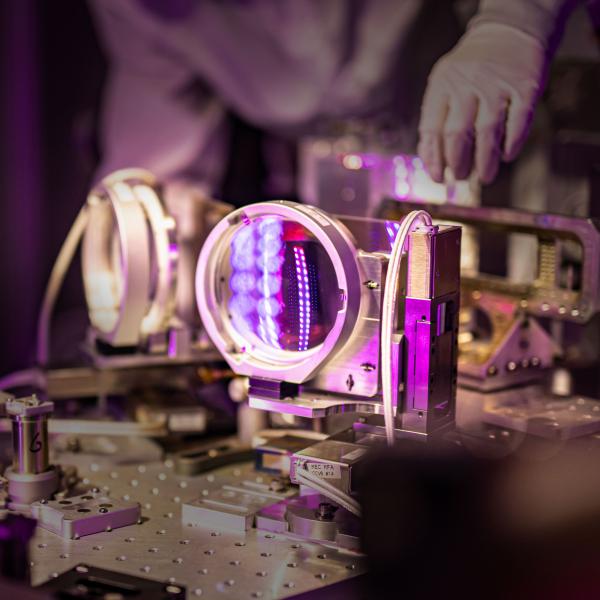
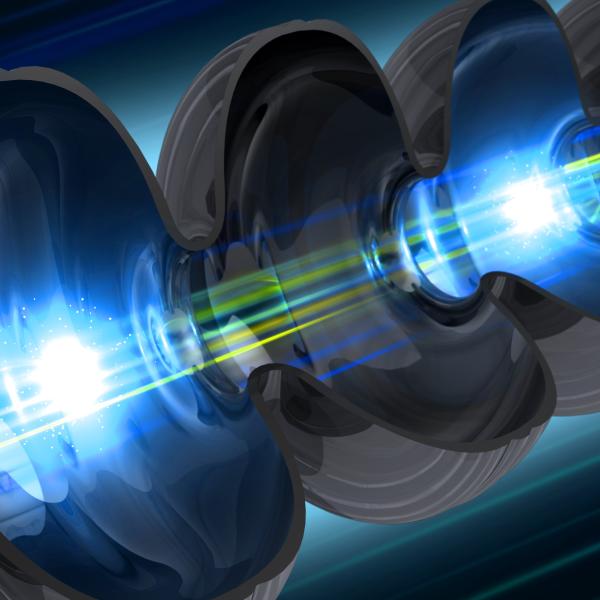
SLAC and Stanford researchers secure support for two projects that share one goal: to reduce the side effects of radiation therapy by vastly shrinking the length of a typical session.
Areas of research: X-ray and ultrafast science; Linac Coherent Light Source (LCLS); LCLS-II; molecular movies; chemical sciences; chemical dynamics; X-ray imaging; ultrafast electron diffraction (UED)
Our original 2-mile-long particle accelerator, built half a century ago for groundbreaking particle physics research, has been repurposed as the world’s first hard X-ray free-electron laser and a testbed for next-generation accelerator technologies.
Researchers discover that electrons play a surprising role in heat transfer between layers of semiconductors, with implications for next-generation electronic devices.
If scaled up successfully, the team's new system could help answer questions about certain kinds of superconductors and other unusual states of matter.
Join us for a full day of talks and panel discussions looking at the past, present and future of the Stanford Synchrotron Radiation Lightsource (SSRL).