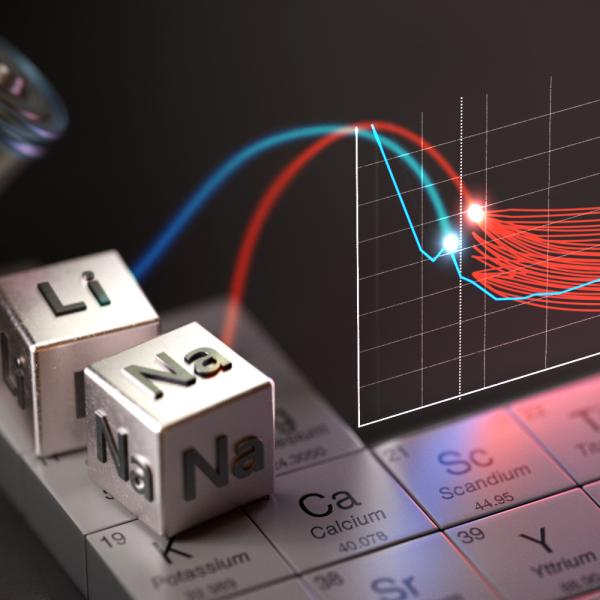
A market and supply chain analysis for sodium- and lithium-ion batteries is the first by STEER, a new Stanford-SLAC energy technology analysis program.
Scientists studying laser-plasma proton acceleration made an unexpected breakthrough, simultaneously resolving multiple long-standing problems although they had only aimed to address one.
He met with SLAC staff and toured the lab’s cutting-edge facilities, diving into world-leading research in X-ray and ultrafast science, artificial intelligence, astrophysics and more.
Results obtained with SLAC’s X-ray laser show how tiny magnetic coils can align over a surprisingly broad timescale, inspiring new ideas for microelectronics.