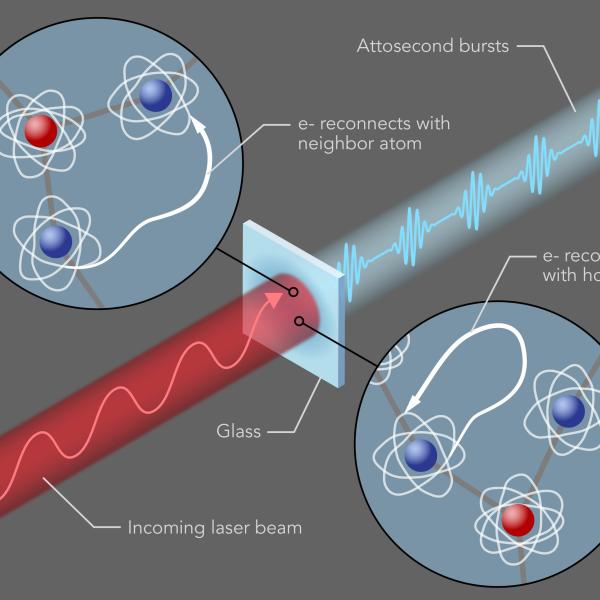
This novel method could shrink the equipment needed to make laser pulses billionths of a billionth of a second long for studying ultra-speedy electron movements in solids, chemical reactions and future electronics.
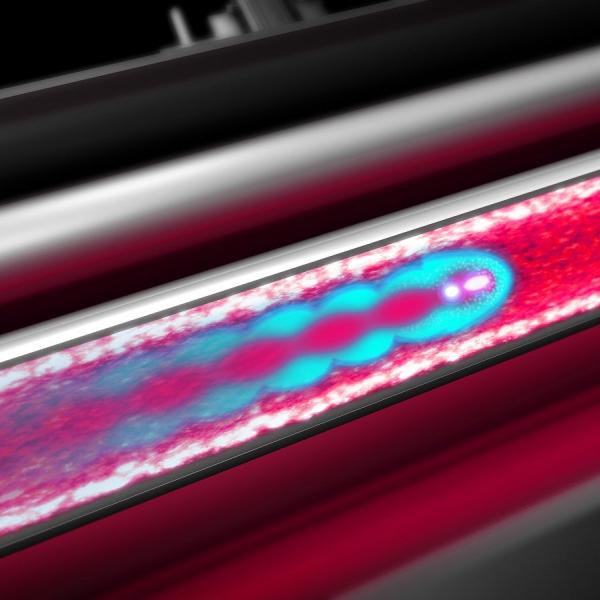
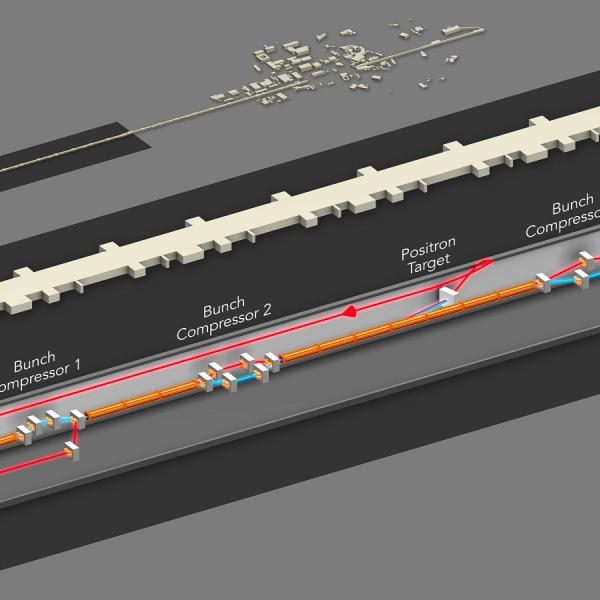
Researchers will use FACET-II to develop the plasma wakefield acceleration method, in which researchers send a bunch of very energetic particles through a hot ionized gas, or plasma, creating a plasma wake for a trailing bunch to “surf” on and...
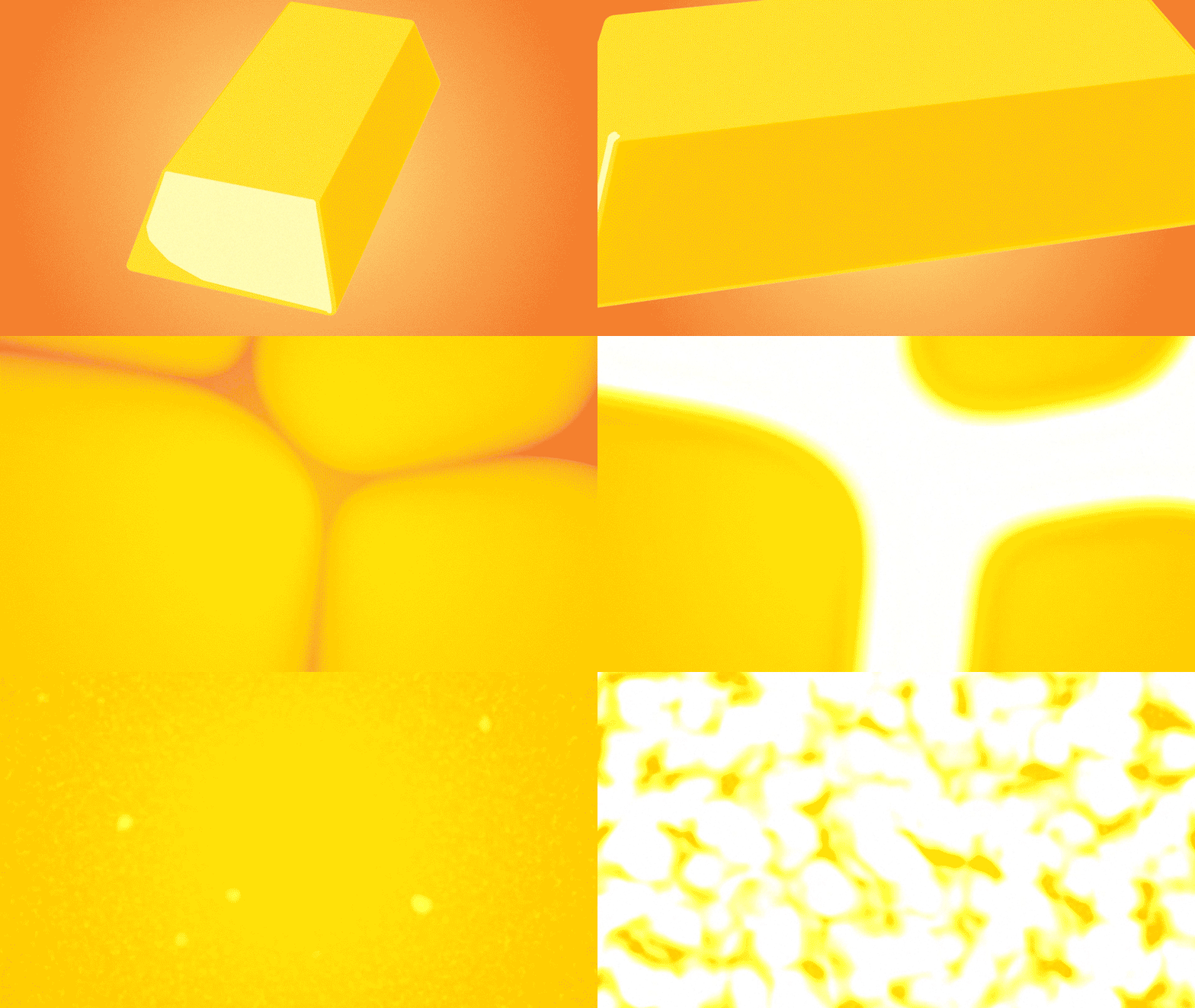
This animation shows the results of a recent study at SLAC, in which researchers used a powerful beam of electrons to watch gold melt extremely rapidly after being heated by a laser pulse.
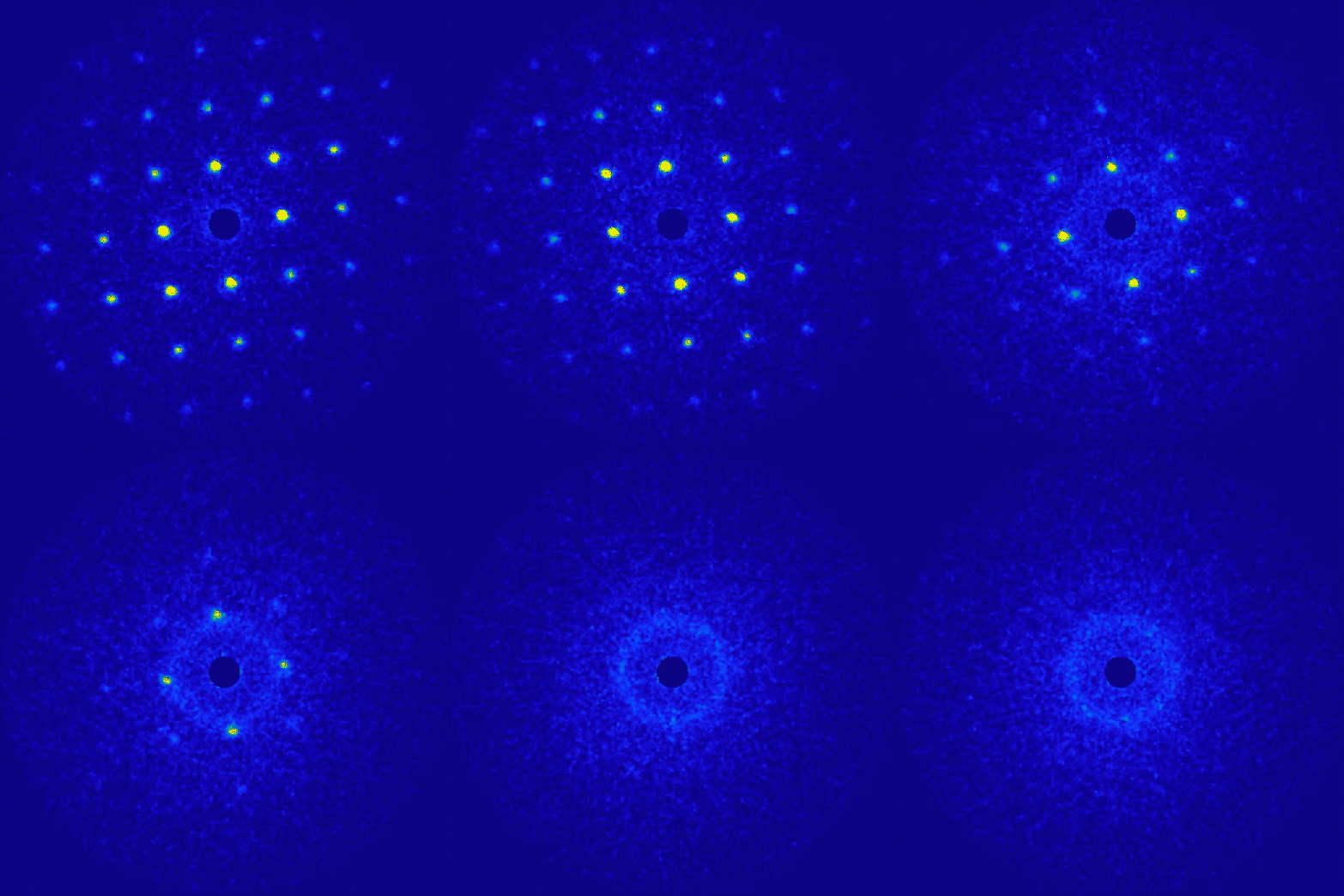
This movie shows the transition of a gold sample from a solid (dotted pattern) to a liquid (ring pattern) after being heated by a laser pulse. It was taken with SLAC’s ultrafast “electron” camera, an instrument for ultrafast electron diffraction...