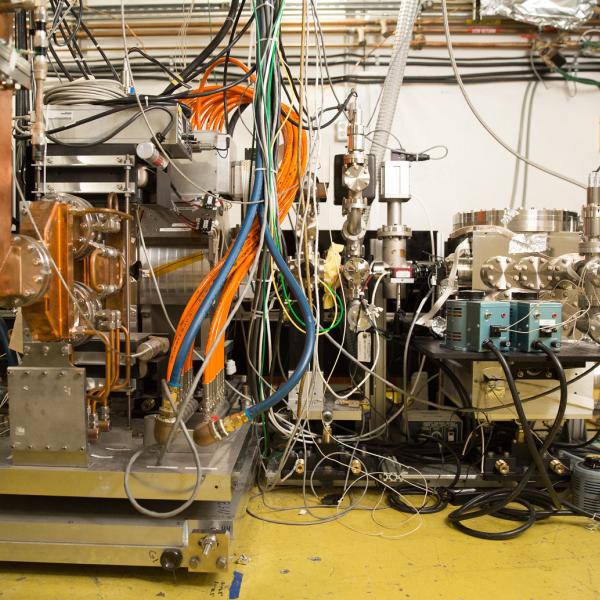
Batteries come in many shapes and sizes, but their materials can be hard to source. SLAC researchers are trying to build them with more abundant and ethical elements.
The first batch of data from the Dark Energy Spectroscopic Instrument is now available for researchers to mine. Taken during the experiment’s “survey validation” phase, the data include distant galaxies and quasars as well as stars in our own Milky...
In this lecture, Dr. Rebecca Leane will review a range of dark matter searches using celestial objects, including exoplanets, solar-system planets, the Sun, and the Earth.
Lead Scientist, Stanford Synchrotron Radiation Lightsource (SSRL)
Areas of research: X-ray and ultrafast science; energy sciences; X-ray microscopy and X-ray characterization of materials far from equilibrium; energy storage; battery research; 3D metal printing
Assistant Professor of particle physics and astrophysics
Areas of research: Physics of the universe; particle physics; LHC physics with the ATLAS Experiment; Higgs boson; advanced accelerator R&D; future electron-positron collider R&D; tracker detectors
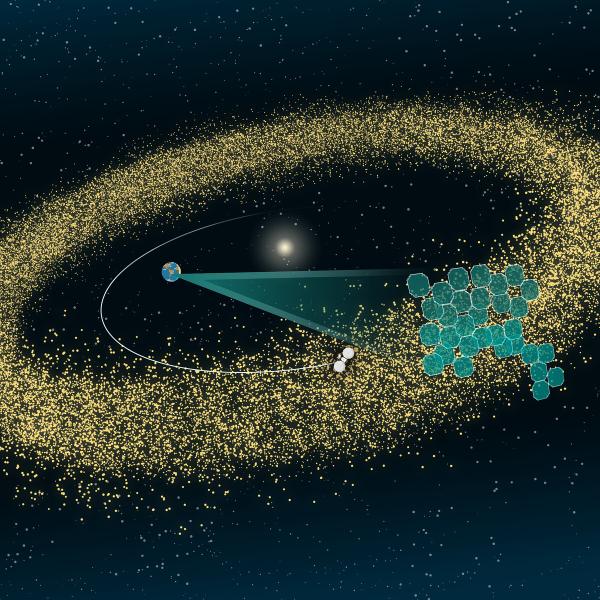
Vera C. Rubin Observatory’s detailed, big-picture view of our Solar System and ability to quickly detect and track moving objects will provide a gold mine of data to benefit space mission planning and preparation.
Division Director of Structural Molecular Biology (SMB), Stanford Synchrotron Radiation Lightsource (SSRL)
Areas of research: structural biology; X-ray crystallography; synchrotrons and X-ray free-electron lasers; COVID-19 research and drug discovery; protein dynamics; experimental automation