News archive

Browse the full collection of SLAC news releases and features and stay up to date on the latest scientific advancements at the laboratory.
The research sheds light on how a key regulator of inflammation forms, which could help guide new therapeutic approaches to inflammatory diseases.

inflammasome

Argonne, SLAC researchers designed a chip that compresses and processes detector data instantly, letting scientists analyze results and steer experiments as they happen.

Silicon chip that integrates both imaging sensors and data compression, shown next to a U.S. penny

By instigating atomic disorder in lithium-ion battery materials, researchers created more stable materials that don’t expand, contract and degrade like traditional materials do.

Illustration of layers in a battery material

The winning teams from Lynbrook High School and Joaquin Miller Middle School will continue on to nationals.

eight middle school students sit behind a long table at the front of an auditorium with buzzers in front of them as they compete in a science knowledge competition

SLAC researchers and collaborators trained a neural network that can use ion momentum to work backward and predict the pre-blast geometry of a molecule.

Illustration of AI used for the reconstruction of the structure of molecules blown up by X-ray pulses

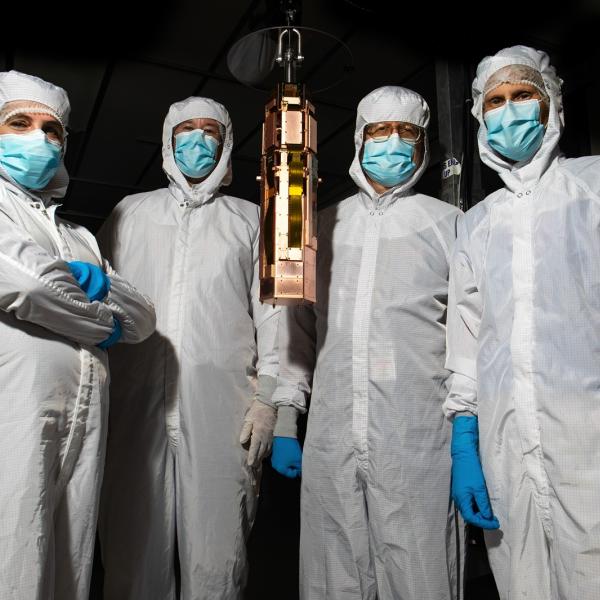
The experiment’s detectors have reached their operating temperature, almost a thousand times colder than outer space.

SuperCDMS team members posing with a detector tower.

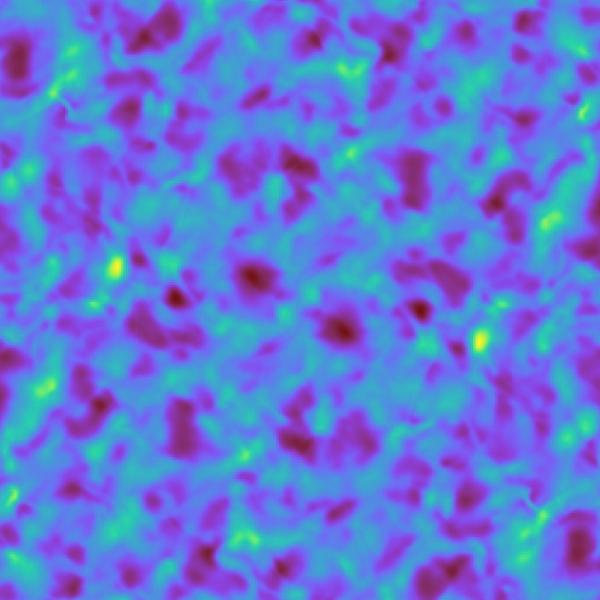
An international team of researchers simulated magnetic forces in the early universe and found they could bridge the gap between the observed and calculated rates of the universe’s expansion.

A simulation of the distribution of matter in the early universe

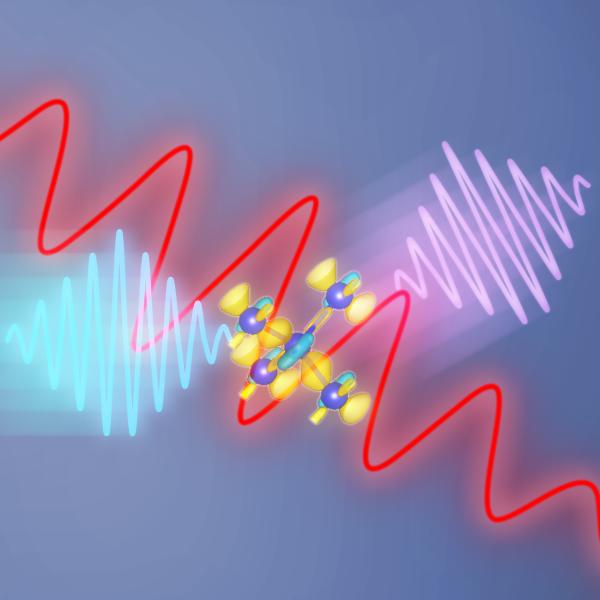
The new method allows better studies of valence electrons key to materials’ properties and could help unlock novel photocatalysts, light-switchable superconductors and other applications of the future.  

Illustration showing the mixing of X-rays and optical light

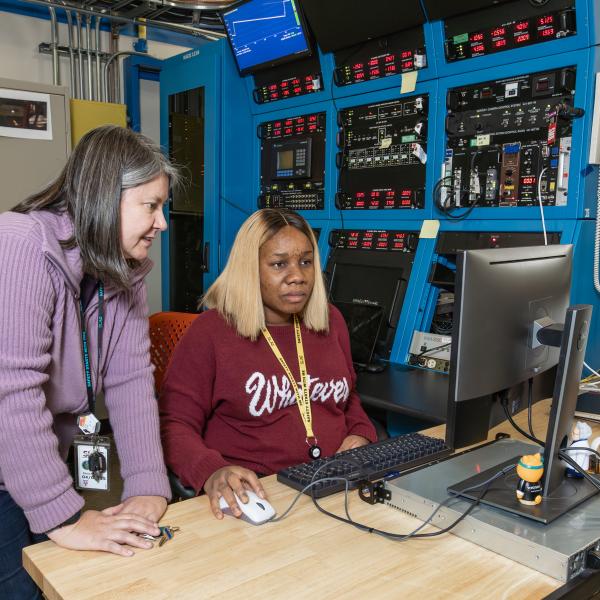
Making ‘magic’ happen with bright X-rays, SLAC’s Silvia Russi takes us into the world of a beamline scientist. 

One woman standing, a second woman sitting down at a computer.

After five years, SLAC scientists are ready to prototype a new X-ray laser concept.

Illustration of parts of a device.