News archive

Browse the full collection of SLAC news releases and features and stay up to date on the latest scientific advancements at the laboratory.

Star formation populates this image of the Seagull Nebula taken in Fall 2024 by Rubin Observatory’s engineering test camera.

Blue and pink swirls against a starry black background

Researchers at SLAC are using high-energy X-ray pulses probe electronic motion deep within atoms and dense plasmas. 

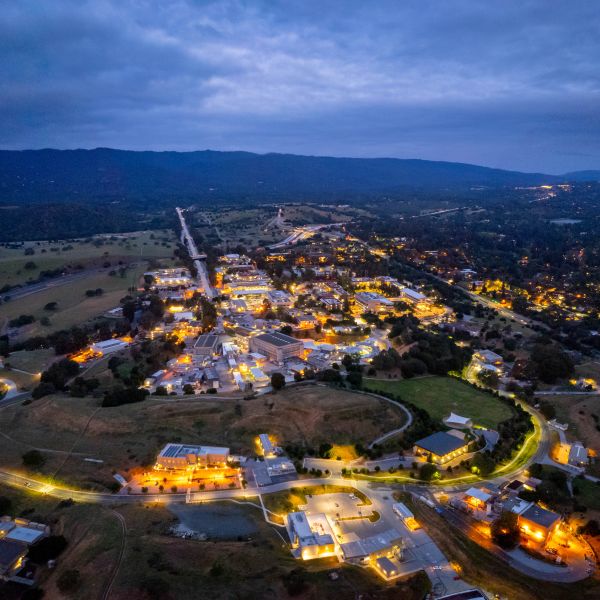
Aerial View of The Linac Coherent Light Source (LCLS) at SLAC at sunrise.

They will explore proteins that are sensitive to magnetic fields and equations that explain our universe at the smallest and largest scales. 

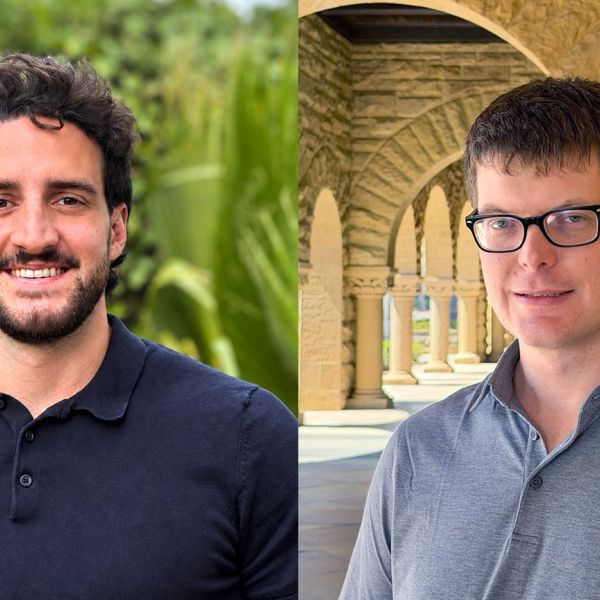
Miguel Correia and Shaun Burd

Adam Nielander will pursue research on light-powered catalysts for next generation energy technologies

Man in a suit standing

Stanford and SLAC faculty members Wendy Mao and Alberto Salleo have been honored for work in compressed-matter physics and polymer electronic materials.

Wendy Mao and Alberto Salleo

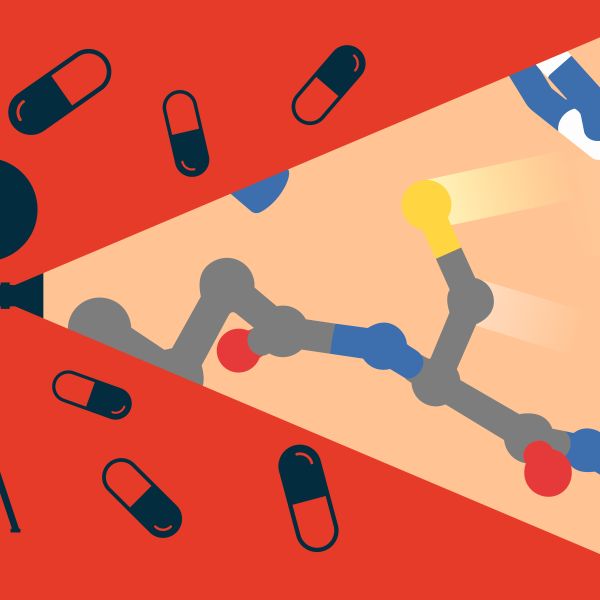
Using X-ray free-electron lasers like SLAC’s LCLS, researchers study how enzymes catalyze reactions, which could help them develop drugs and other medical treatments.

Movie projector shining light on molecular models

Tomorrow's innovations will come from autonomous labs that slash discovery time, and SLAC's facilities are taking the lead in a new collaboration with Stanford, other national labs, universities, and industry.

Illustration depicting self-driving lab from accelerator to experiment

Announced by the DOE today, the funded project will explore the use of Super Intelligence to accelerate our understanding of a process central to energy and chemical production. SLAC will also play a key role in eight other Genesis Mission...

Illustration on blue of a central cluster of white circles connected by lines, with arrows pointing to it from four icons: a lightbulb with gear, a magnifier over a chart, an open book and a database. A yellow beam strikes a glowing tiled square at left; a triangular tiled shape glows at right.

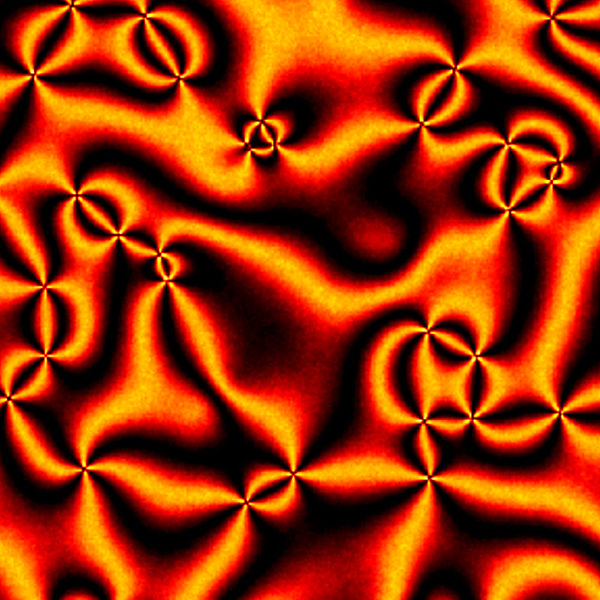
A SLAC-Stanford team developed a new way to precisely measure just how much energy has dissipated into heat in an electrical system – and how to optimize it.

Black swirls and bar-like shapes against an orange background

SLAC and Stanford scientists used ultrafast electrons and a laser to reveal an unexpectedly strong optical response to ionization, opening new possibilities for radiological imaging and sensing while shedding light on the fundamental behavior of materials.

An incoming orange beam strikes a layer of purple and green spheres spread horizontally across the image. A blue beam is located to the left of the orange beam.