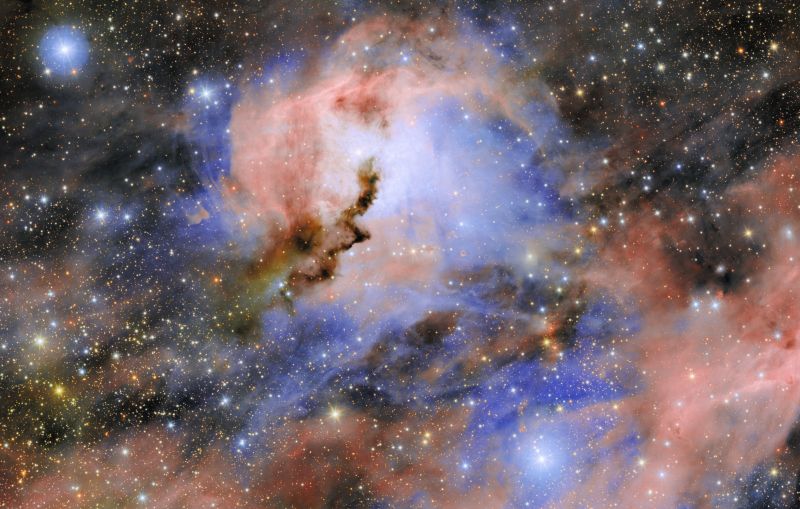
The infant universe was awash in fundamental particles. Over billions of years, matter cooled and clumped into stars and galaxies, tied together by an invisible cosmic web of dark matter. Meanwhile, dark energy was accelerating the expansion of the universe. This evolution continues today, as stars, black holes and whole galaxies collide and shower us with cosmic rays.
SLAC and Stanford are at the leading edge of developing tools for studying the physics of the universe from all angles – from the fundamental particles and interactions that underlie everything we know to the forces that shape galaxies, and beyond. Building on our Nobel Prize-winning history of fundamental physics research, we carry out a broad range of world-leading studies aligned with national priorities in the areas of elementary particle physics, astrophysics and cosmology, including investigations of dark matter and neutrinos that leverage strong national and international partnerships.

Elementary particle physics
With more than six decades of experience in building powerful particle accelerators and exquisitely sensitive detectors, SLAC and its partners play a leading role in creating and studying nature’s fundamental building blocks and developing theories that explain and guide experiments.

Astrophysics and cosmology
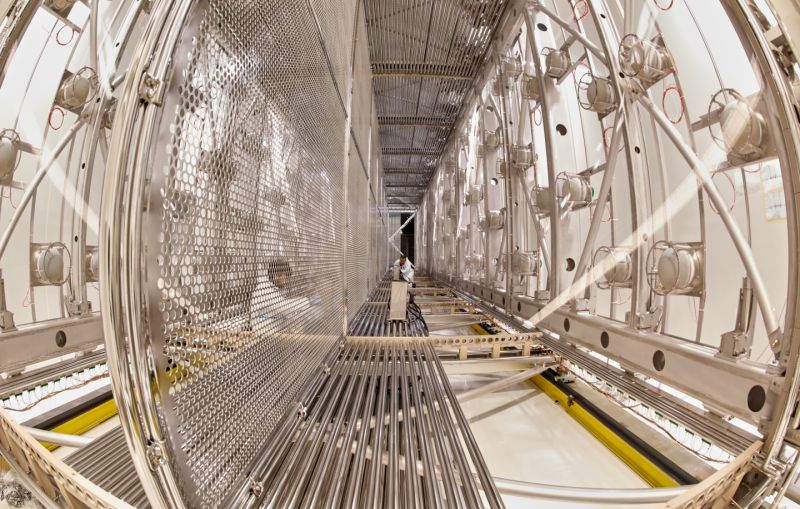
To explore the evolution of the universe, the formation of stars and galaxies, the nature of dark matter and dark energy, and the fundamental structure of space and time, SLAC researchers develop cutting-edge scientific tools, from quantum sensors to multi-ton tanks of ultrapure xenon, for experiments deep underground, on the Earth’s surface and in space. Most recently, we built and shipped the world’s largest digital camera to the Rubin Observatory in Chile, where it will give us the widest, fastest and deepest view of the night sky ever observed.
Latest news in physics of the universe
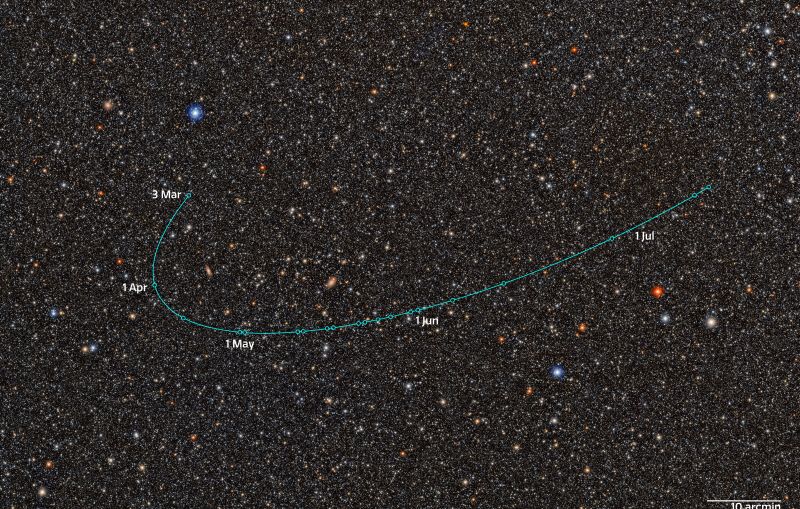
Seagull Nebula through the eyes of NSF–DOE Vera C. Rubin Observatory Commissioning Camera