Annual SSRL Award Honors Former Stanford Grad Student
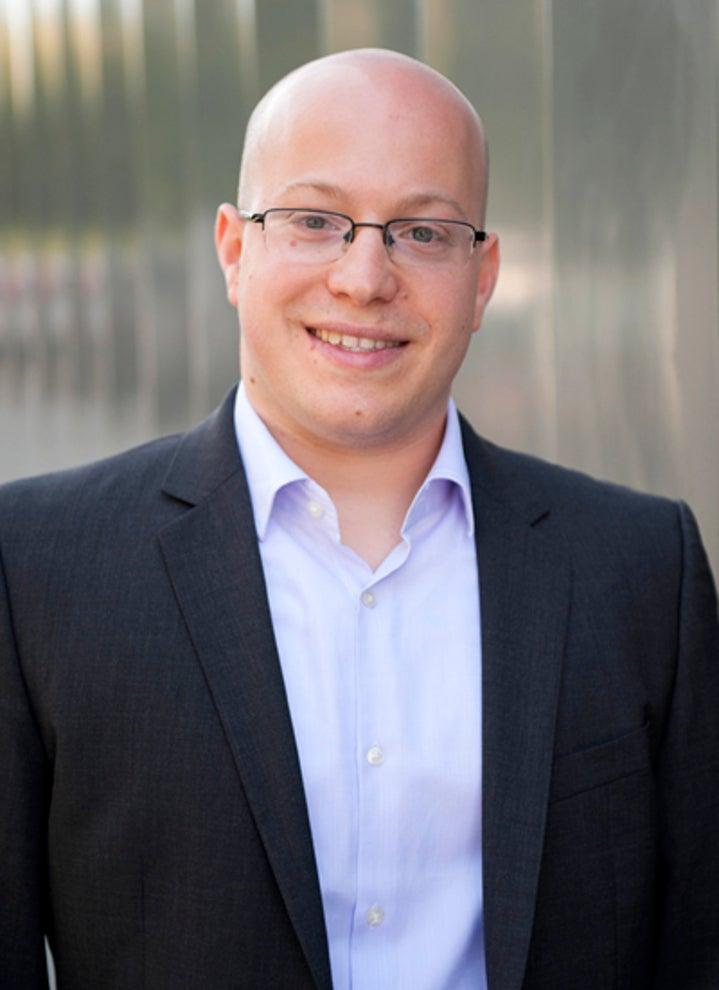
Jonathan Rivnay, a former Stanford graduate student who is now a postdoctoral fellow at the Center of Microelectronics in Provence, France, will receive this year's William E. and Diane M. Spicer Young Investigator Award in recognition of his synchrotron studies of organic semiconductors.
By Glenn Roberts Jr.
Jonathan Rivnay, a former Stanford graduate student who is now a postdoctoral fellow at the Center of Microelectronics in Provence, France, will receive this year's William E. and Diane M. Spicer Young Investigator Award in recognition of his synchrotron studies of organic semiconductors.
The award, honoring SLAC synchrotron pioneer and Stanford University professor William "Bill" Spicer, who died in 2004, and wife Diane, who died in 2009, is presented annually by SLAC's Stanford Synchrotron Radiation Lightsource (SSRL) and the SSRL Users' Organization. The award ceremony will be held Oct. 3, during the LCLS/SSRL Annual Users' Meeting and Workshops.
"I was very honored and surprised when I heard about the Spicer award," Rivnay said last week. "I was actually on holiday, and when I first checked my email I was greeted by a full inbox: the notification, as well as a slew of congratulatory emails." He added, "I certainly know a number of the previous recipients. It's quite a distinguished group."
Just two years ago, Rivnay received a separate research award related to his work at SSRL: the Melvin P. Klein Scientific Development Award.
Rivnay's current research focuses on devices based on synthetic polymer materials that serve as interfaces between the biological world and more traditional microelectronics. The materials show promise for offering a tunable way to communicate with the body's nervous system, Rivnay said.
"They are not only good at conducting electrical current, but they are also good ion conductors," he said, and this ion transport "makes up much of the language of cells, such as the firing of neurons."
The materials are similar to those Rivnay studied at SSRL while he was at Stanford, and he said he is planning new experiments at SSRL and at Lawrence Berkeley National Laboratory's Advanced Light Source to better understand their properties at macro and molecular scales.
Each year a selection committee gives the Spicer award to a new investigator who has made important technical or scientific contributions that benefit from or are beneficial to SSRL or to the light-source research community as a whole.
Alberto Salleo, an associate professor of materials science and engineering at Stanford who was Rivnay's adviser, wrote in a letter to the selection committee that Rivnay has the ability to conduct "careful device analysis while never losing touch with the 'big picture' connotations of his research.” He said Rivnay’s work on organic semiconductors – materials with applications in light-emitting detectors and solar cells – "produced many original and groundbreaking results." For example, it has highlighted important connections between the microstructure of materials and their ability to transport electrons and revealed common structural defects in some popular materials.
Salleo added, "Based on comments I hear at conferences, it is not an exaggeration to say that he is shaping the organic electronic community's view of the role of synchrotron-based X-ray diffraction in studying structure-property relationships."
Harald Ade, a physics professor at North Carolina State University, said in a letter recommending Rivnay for the award, "His work provides now a new framework to think about the function of organic devices, which is a really significant advance."
Contact
For questions or comments, contact the SLAC Office of Communications at communications@slac.stanford.edu.